One of the joys of green woodwork is the use of simple tools and simple, readily available materials. Collecting wood for craft gives us the opportunity to get outside, walk our local woods, and mindfully forage for the materials we need. As green woodworkers we have a responsibility to harvest our materials in way that is beneficial to wildlife and the health of the forest. Harvesting material for green woodwork is known to have a positive effect on the environment from which it comes and increases biodiversity within typically neglected forest stands.
Removing trees from the canopy and midstory allows sunlight to pass to the forest floor. This previously unavailable sunlight energy increases ground cover growth in small woody and herbaceous plants that are important browse species for woodland creatures. The brash (small branches, twigs, and leaves of unusable material) is left on the forest floor to decompose providing nutrients for the soil and food for detritivores. Brash and bits of unused material also provide habitat for small invertebrates and small mammals. The thoughtful harvesting of trees for green woodwork creates a mosaic of habitat types within a woodland. The variably aged and variably sized trees create structural diversity within a forest stand. This structural diversity looks like patches of thick cover adjacent to open sunlit forest floor. It creates edge habitat and a forest community at different stages of successional growth. The differential habitat creates predatory and thermal cover, feeding habitat, and brooding habitat for wildlife.
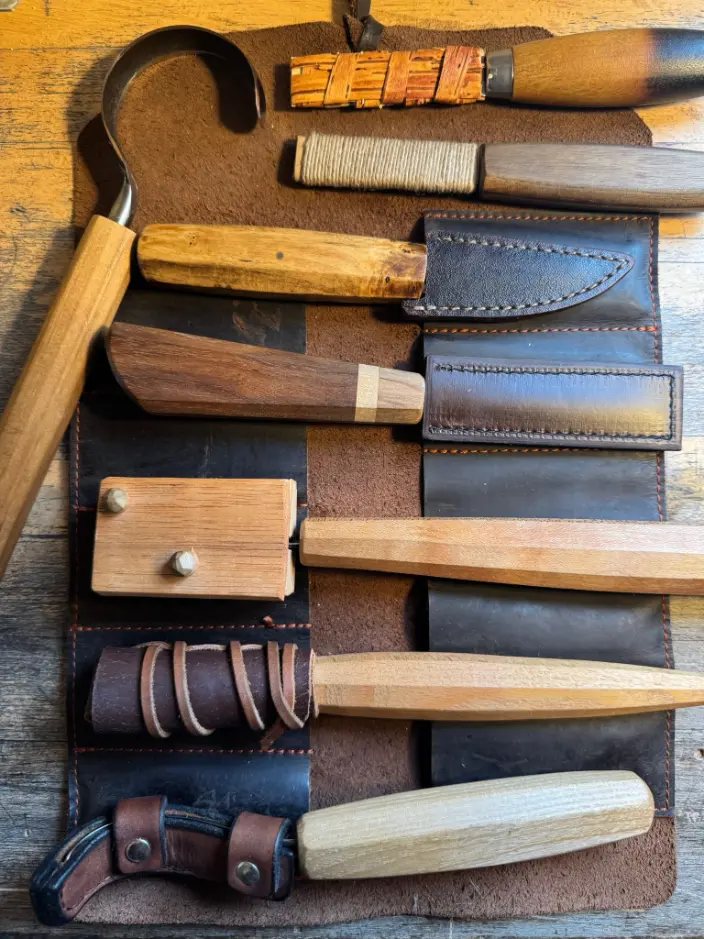
The methods of harvesting green wood are simple. So too are the tools the woodworker needs. I always carry a folding saw in my rucksack and a bow saw in my vehicle for the opportunistic harvesting of green wood. I rarely cut down a living tree for use in craft. If I do, it is done so thoughtfully within the parameters of a forest management plan, or from a coppiced woodland that is harvested at a rotation to achieve all of the above benefits to wildlife and stand health. The vast majority of wood that I harvest for craft is from storm felled trees or of trees felled by tree surgeons and other forest management practices. What does this mean to the hobbyist? After wind storms, take a walk in your local woods. Form a relationship with local tree surgeons and gardeners. Keep note of when public services trim the roadways, footpaths, and bridal ways. All of these resources will provide the materials needed to keep you well stocked and happily crafting.
When harvesting form the natural world, be mindful of your presence and of the resource itself. Harvest with gratitude toward the tree and the natural world to which it – and we – belong. Collecting materials from a woodland is a practice that touches the ancestral bonds in all of us. When our materials are harvested and processed in gratitude, we are given the opportunity to recognize our part in the natural world. Its an attitude of affecting positive change to your woodland and not an attitude of taking.